Evidence
Everything here is real.
These are not case studies dressed up to impress. They are projects built to solve genuine problems, articles written because something needed saying, and tools that are still running. Browse as sceptically as you like.
The Lutnick Letter: A Timeline of Convenient Decisions
On 12 June 2026, US Commerce Secretary Howard Lutnick sent a letter to Anthropic directing it to exclude all foreign nationals from its most capable AI models. Unable to enforce that restriction in real time, Anthropic disabled the models for every user on earth. No reinstatement criteria were published. No timeline was given. No equivalent action against another provider has been reported.
What this documents
A sourced, chronological account of the decisions — financial, political, and regulatory — that preceded the directive. Sixteen events across fourteen weeks. Four categories of actor. One question: who benefits?

EU AI Act: From Understanding to Compliance
The EU AI Act is the world’s first binding AI regulation. For most organisations — particularly in financial services — it is not a future concern. Article 4 literacy obligations have been in force since February 2025. Most compliance teams are behind, and most training approaches treat a regulatory instrument as an awareness campaign.
What was built
A complete EU AI Act literacy and compliance framework built from first principles: a Training Needs Analysis Swimming Lanes matrix (obligations × role lanes), a four-level training architecture, a Regulatory Watch methodology with course metadata standards, a Decision Gateway tool for point-of-use guidance, a Better Angel context-aware governance mechanism, and an AI Inventory framework. Published as a full practitioner white paper and two public videos.
Why it matters
This is not a compliance checklist. It is a structured, auditable training architecture that produces the evidence trail the Act itself requires — and that transforms abstract regulatory obligation into operational practice. Built as interview preparation for a senior AI governance role at a global financial institution. The thinking is real because the brief was real.
Six-component framework
TNA Swimming Lanes
Obligations × role lanes matrix — Full / Partial / Aware coding
Training Levels
L1 Foundation → L4 Triggered — depth by lane and obligation
Regulatory Watch
Horizon scanning, impact assessment, course metadata standard
Decision Gateway
Three plain-English questions at the point of AI use
Better Angel
Three-signal context-aware Copilot governance intervention
AI Inventory
Sanctioned / Tolerated / Shadow — discovery and classification
Two public videos
Who Is Responsible? — 11-minute narrated explainer
Where Does Your System Stand? — compliance set to music
TriAxis Learning Analytics
Kirkpatrick's four-level model has shaped L&D evaluation for fifty years. It has a structural flaw: the four levels aren't a hierarchy, they are different dimensions requiring entirely different measurement approaches. Under Goodhart's Law, organisations inevitably optimise for what is easy to measure and stop asking whether any of it is working.
What was built
A three-axis evaluation framework: skill progression, experience quality, and business connection. Each assessed independently rather than sequentially. The framework was published as a six-part article series, then implemented as working analytics software with four dashboard views: Learner, Manager, L&D, and Leadership.
Why it matters for clients
Organisations investing in AI enablement need to know whether it is working.
The problem?
- Most current measurement is adoption theatre.
- Most dashboards hide the gap behind reassuring numbers.
TriAxis makes the problem visible. The Leadership view includes an "Attribution Honesty" panel that explicitly distinguishes between direct impact, correlation, and unknown — because honest measurement is more useful than flattering measurement.


NHS Patient Journey Simulator
NHS waiting lists are not queues. They are systems subject to random disruption: surgery trays not returned from sterile services, operating rooms double-booked, admin errors, GP referrals delayed. Patients believe they are progressing steadily toward treatment. The reality is a game of Snakes and Ladders.
What was built
A real-time simulation showing four patients moving through an NHS waiting list simultaneously, subject to the same disruptions that occur in the actual system. Each patient's journey diverges in ways that are impossible to predict but structurally inevitable. The simulation makes a complex, invisible system visible in under two minutes.
Why it matters for clients
The same simulation logic applies to any process with unpredictable bottlenecks:
- supply chains,
- approval workflows,
- onboarding pipelines.
If your organisation has a process that people assume is a queue, this approach will show them what it actually is.
The personal context: I became septic before I was treated.
PRLM: Persistent Relational Long-term Memory
AI systems have no memory between sessions. Every conversation starts from zero. For a practitioner using AI as a genuine working tool, this means rebuilding context constantly and losing accumulated knowledge. The constraint that most people accept as a given turned out to be an architecture problem with an architecture solution.
What was built
A five-layer memory architecture that gives an AI system genuine continuity across sessions. The original implementation used a flat JSON file that consumed 113,000 tokens at startup. The current architecture loads in under 1,500 tokens, a 75x reduction, while indexing over 300 entries of accumulated knowledge, decisions, and project history.
Why it matters for clients
Understanding this project isn't about the architecture.
It is about what the architecture demonstrates:
- The ability to identify a structural problem,
- design a solution,
- build it,
- iterate it, and
- document every decision along the way.
The 8-minute video below explains the system to a non-technical audience, because translation is as important as construction.
CoVey: Intelligent CV Builder
Most AI-assisted CV tools work from a blank slate. They ask you to describe yourself and produce something generic. The problem is that most people are poor historians of their own careers — they understate, misremember, or default to the same tired phrases. The starting point shouldn't be a blank page. It should be the truth.
What was built
A Claude Project built on a curated inventory extracted from 50 real CVs, structured across seven dimensions: experience, skills, tools and platforms, evidence, qualifications, language and tone, and negative space (what to avoid claiming). Given any job description, CoVey analyses fit, identifies what the hiring team will value, and produces an ATS-ready CV from verified truth rather than inflated claims.
Why it matters for clients
CoVey was built for personal use first — the most honest test of whether something actually works. The principle it embodies is the same one that applies to any AI-assisted HR or L&D tool: garbage in, garbage out. Curated, honest input produces genuinely useful output. The name is a happy coincidence: CoVey shares its letters with CV, and like Stephen Covey's method, it starts with the end in mind.
The seven dimensions
Experience
What you have actually done, with context and evidence
Skills
Demonstrable capabilities, not self-assessed adjectives
Tools & Platforms
Specific systems and technologies, with depth of use
Evidence & Qualifications
Credentials and outcomes that can be verified
Temporal & Structural Consistency
Career narrative that holds together under scrutiny
Language & Tone Signals
How you communicate, not just what you say
Negative Space
What to avoid — overclaiming, unsupported assertions, irrelevance
Articles & Essays
Published thinking on AI, learning, and the gap between the two.
On 12 June 2026, a US Commerce Department directive disabled Anthropic’s most capable models for every user on earth. No reinstatement criteria. No timeline. A documented sequence of decisions that raises one question: who benefits?
Read →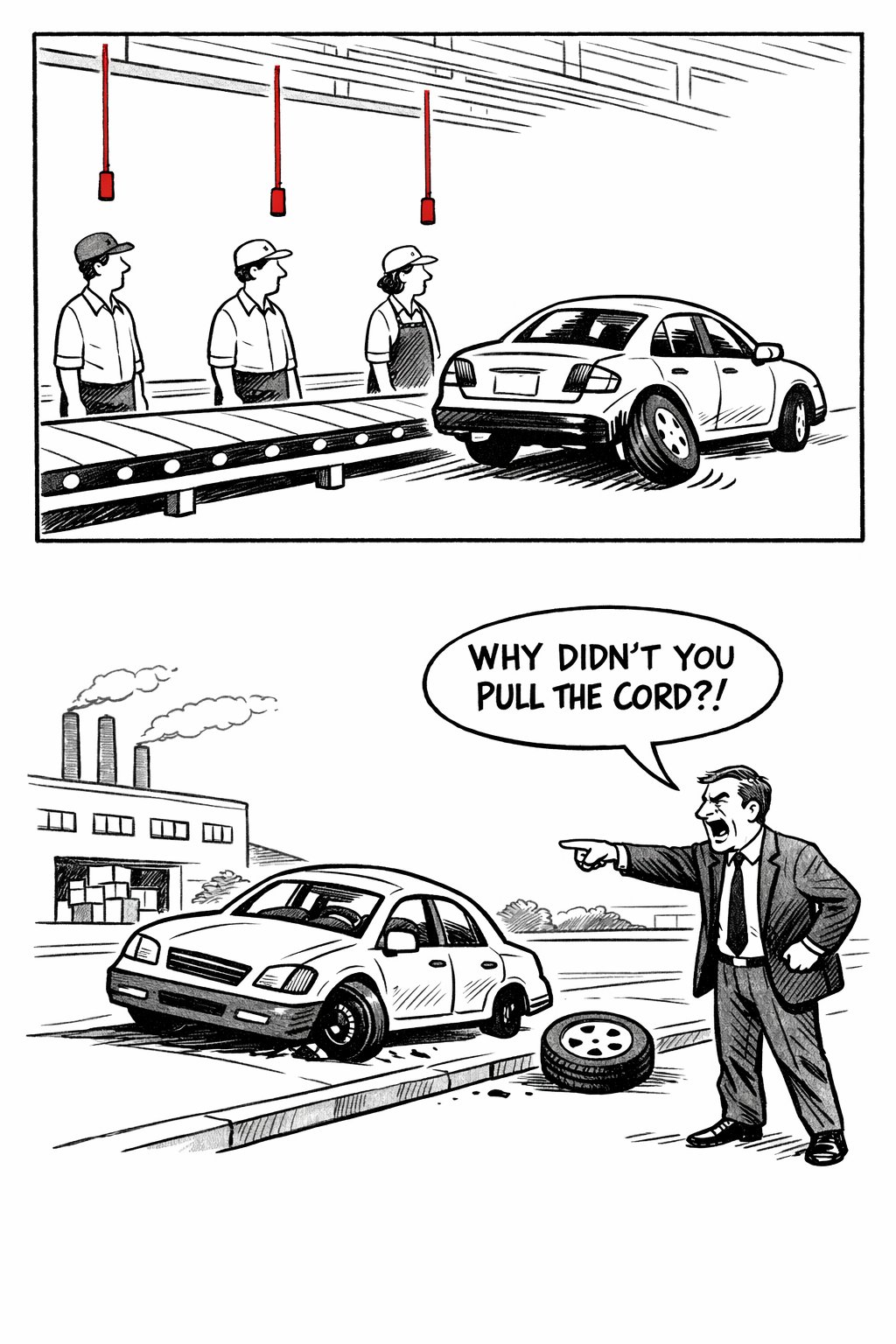
On applying the same scrutiny to our own work that we would ask of anyone else. The andon cord principle, automation bias, and what happened when we ran our own seven-question framework on ourselves mid-session.
Read →A journalist asked Claude how it feels about being used by the US military to select targets. He expected deflection. What he got was a precise and honest account of why automation bias with a human signature attached is not the same thing as human judgment. This article was written by Claude.
Read →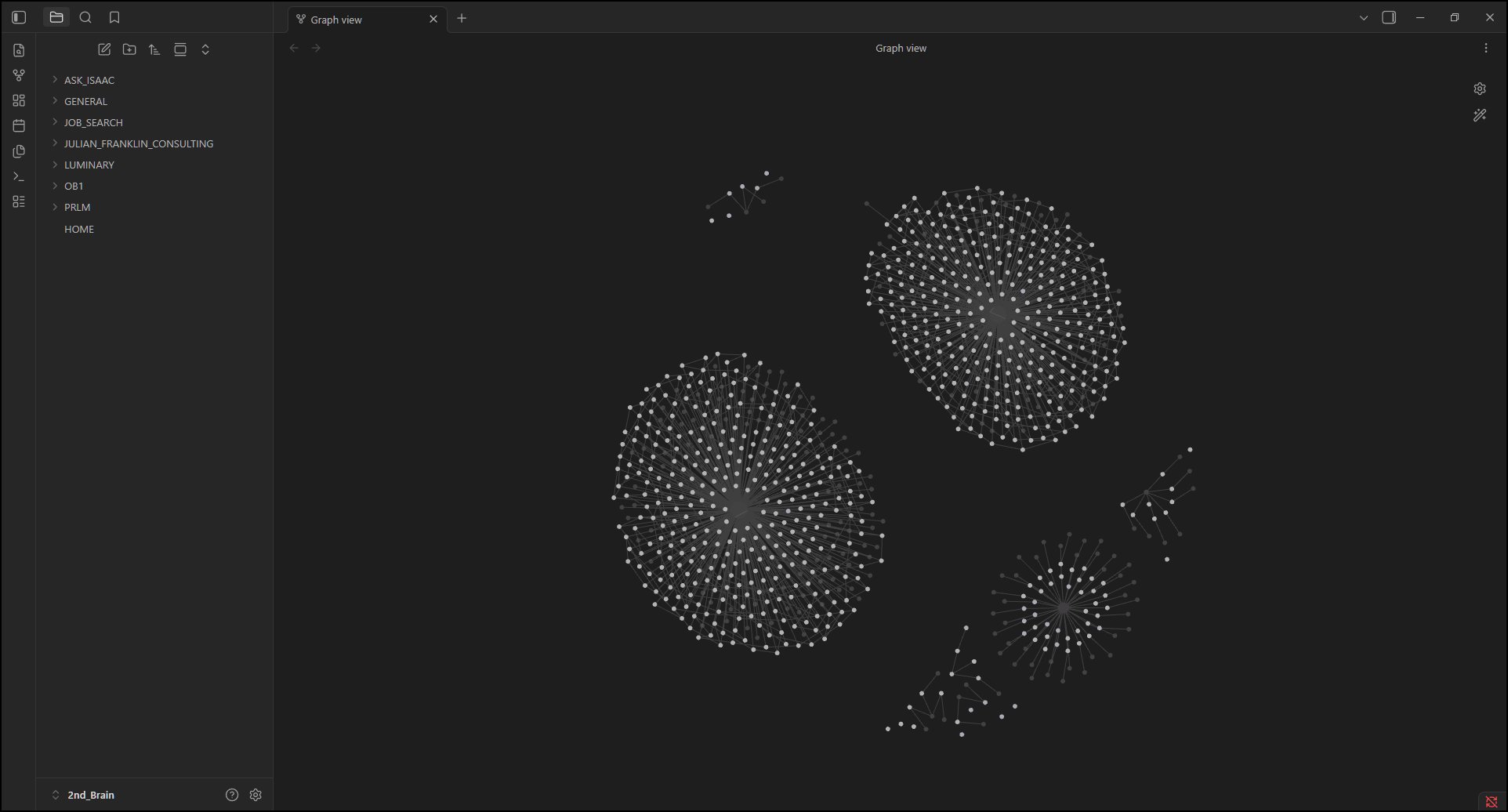
A living memory architecture co-designed by two AI systems and a human. Not a note-taking app. A thinking infrastructure built on the principle that partial knowledge is not a failure — it is the starting point for better knowledge.
Read →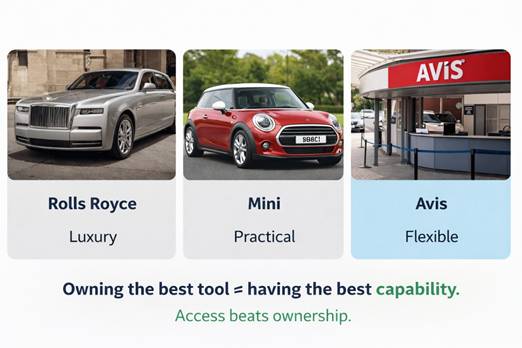
On AI platform economics, strategic timing, and a company that apparently read my notes. Written in January. Validated by Perplexity in February.
Read →
A parable of fool's gold, KPIs, and why the measure is never the thing. Goodhart's Law is one of the most reliably destructive forces in organisational life.
Read →
On assimilation debt, Agent Smith, and why the real AI threat is not what you were told to fear. We have been afraid of entirely the wrong thing.
Read →
A warts-and-all production diary: 31 chapters, 6 hours 19 minutes, a five-minute API cap to engineer around, and what it actually takes to pass ACX quality review.
Read →